
Last Shelter: War Z
LAST ORIGIN STUDIO LIMITEDStrategy
4.61.24K Reviews
- Version
- 26.1102.001
- Installs
- 1.00M
- Age Rating
- Teen
Screenshots
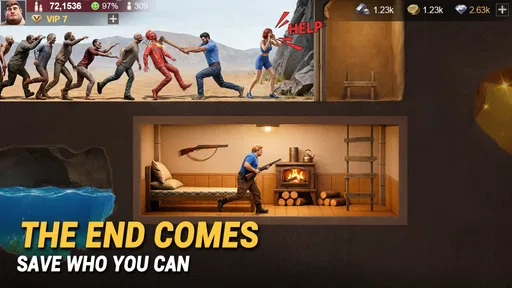
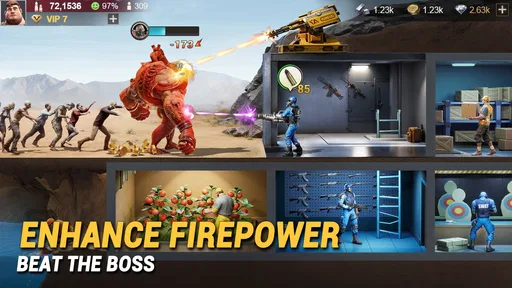
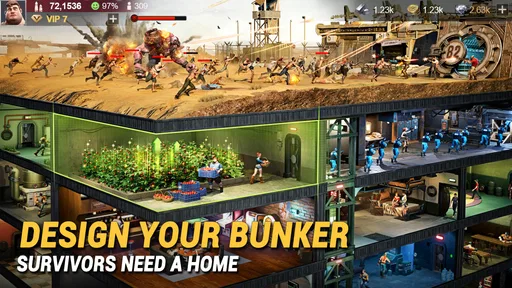

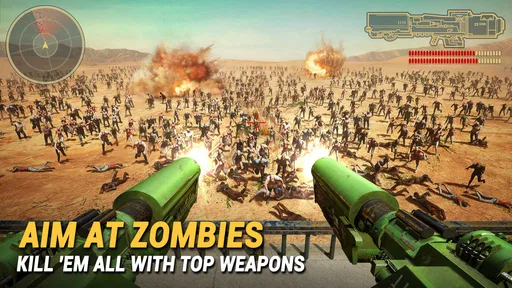
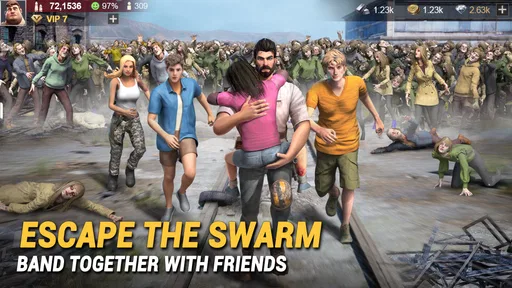
Our Review of Last Shelter: War Z
 Analysis by Appyee
Last Shelter: War Z is the kind of strategy game that asks for a little more attention than a quick puzzle, but not necessarily a full evening every time you open it. I spent time with it as a mobile survival strategy experience and found its appeal in the constant question of what deserves attention next: strengthening the settlement, sending forces into danger, or preparing for the next threat. The zombie-apocalypse setting gives those choices an immediate purpose, while the strategy layer makes each decision feel connected to the next one.
Developed by LAST ORIGIN STUDIO LIMITED, Last Shelter: War Z is free to download and aimed at a Teen audience. Its store presence shows over 500 thousand installs and an average score of 4.6 from around 8.1 thousand ratings, which suggests that the basic formula has found a committed mobile audience. I would not describe it as a casual game in the strict sense, though. It is easier to enjoy when you are comfortable checking progress regularly and accepting that improvement comes through a sequence of small decisions rather than one dramatic victory.
Starting with one decision and discovering the real game
The first useful way to approach Last Shelter: War Z is not to treat it as a simple zombie shooter. The zombies provide the theme and the pressure, but the heart of the experience is planning. You are building toward a stronger position, deciding where limited attention should go, and judging whether an action is worth the time and risk involved. That makes the opening moments more interesting than the store summary might suggest.
My first instinct was to look for the most obvious immediate improvement. In a game like this, that can be a trap. A stronger unit or upgraded building feels satisfying, but the better choice is often the one that removes a future bottleneck. I found myself thinking less about a single powerful move and more about whether my next action would keep several later options open. That is the point where the game shifts from theme-driven entertainment into genuine strategy.
The action-feedback rhythm starts with a clear instruction: improve something, send a force somewhere, or prepare for a challenge. The result then tells you whether that decision helped. A successful move creates room for another upgrade or expedition; a poor choice leaves you waiting, adjusting, or rebuilding your plan. The most satisfying part is not simply winning a fight, but seeing one sensible decision make the next decision easier.
That structure makes the game a good fit for players who enjoy gradual control. You are not expected to solve the entire apocalypse at once. Instead, you make a practical choice, watch its consequences, collect the benefit, and decide whether to repeat the process or change direction. I liked that sense of momentum because it gives even a short visit a purpose.
Why the opening can feel busier than expected
There is a lot for a new player to absorb. The survival setting may look familiar, yet the strategy layer introduces several priorities at the same time. If you try to improve everything equally, progress can feel scattered. My advice is to choose one immediate goal for each visit. For example, you might focus on making the settlement more capable, preparing a particular force, or clearing a nearby obstacle. A narrow goal makes the feedback much easier to read.
This is also where the game differs from a straightforward action alternative. A conventional zombie game usually tells you what matters through movement, aiming, and enemy patterns. Here, the important information is spread across preparation, timing, and the condition of your wider setup. If you want constant direct control, the strategy format may feel slow. If you enjoy turning partial information into a workable plan, the extra layer is the reason to stay.
The game runs on Android devices using version 7.0 or later, and the current version is 26.0804.001. Those details matter less than the play style, but they are useful before installing: this is a modern mobile strategy title rather than a tiny offline distraction. I would check that my device has enough comfortable screen space and that I am happy with a game designed around repeated returns rather than one uninterrupted campaign.
How the feedback rhythm keeps another session tempting
Every session works because an action produces a visible consequence. You commit to a task, wait for the outcome, and then receive a reason to continue. That reason might be a stronger position, a newly available choice, or simply the feeling that the next attempt will go better because you now understand the situation. The loop is simple to describe, but its effectiveness depends on whether the feedback feels meaningful. In my experience, it usually does.
The reward is not only a resource or an improvement. It is information. A result teaches you what your current setup can handle and where it is weak. That turns failure into something more useful than a dead end, provided you are willing to adjust rather than repeat the same action automatically. I found this especially important when I was tempted to push forward before my preparation was ready.
One practical habit helped me more than rushing from task to task: I checked the next likely requirement before spending what I had just earned. That small pause reduced waste. Instead of treating every reward as permission to buy the most visible improvement, I treated it as part of a chain. If an upgrade supported several later actions, it was usually more valuable than a short-term boost that solved only the current problem.
That is one of the less obvious strengths of Last Shelter: War Z. It rewards players who read the game as a network of dependencies. The best move is not always the one with the largest immediate number. Sometimes it is the improvement that lets you act more efficiently during the following sessions. This gives the game more depth than a basic “collect and upgrade” routine.
A realistic short-session routine
Imagine opening the game during a lunch break. I would first review what has finished, then choose one priority instead of tapping through every available option. If a force is ready for a safe objective, I would send it out; if the settlement is close to an important improvement, I would preserve resources for that step. Before closing the game, I would start the next useful action so the return visit has a clear purpose.
That routine works because it gives the session a beginning, middle, and end. The beginning is assessment, the middle is commitment, and the end is preparation. You are not merely checking whether something happened. You are shaping what will happen while you are away and deciding what result you want to inspect later.
Players should also understand that the game’s rhythm can become demanding if they dislike unfinished business. The design encourages you to think about the next visit before the current one is over. That is engaging for me when I have a few minutes available, but it can feel like a chore if I want a completely self-contained round with no future planning.
Where purchases fit into the experience
Last Shelter: War Z is free, with in-app purchases ranging from $0.99 to $120.47 per item. I would approach that range carefully. A free entry point is useful because it lets you test whether the settlement-and-survival loop suits you before spending anything. At the same time, the presence of high-priced items means I would set a personal limit before getting invested.
My preferred approach would be to play long enough to understand which delays or shortages genuinely bother me. Buying something before learning the normal rhythm can make it harder to tell whether the purchase solved a real problem or simply encouraged faster consumption. The game is more rewarding when I understand the value of an improvement in context, not just because it is offered at a tempting moment.
This is also where the game may be a worse choice than a premium strategy title or a simpler free game. If you want a predictable one-time purchase with no pressure to consider optional spending, this format may not suit you. If you are comfortable treating purchases as optional conveniences and keeping control of your budget, the free starting point makes experimentation easier.
The reset between sessions is what gives progress meaning
A good mobile strategy game needs a reason to close and reopen. Last Shelter: War Z gets that reason from the reset between sessions. You finish one set of actions, leave the game with a new plan in motion, and return to see whether the plan produced the result you wanted. That pause is not empty time; it creates anticipation and gives the next session a clear starting point.
I liked this more than a design that constantly throws rewards at me while I am playing. The break allows me to reconsider priorities. Maybe the previous session revealed that I was pushing too aggressively. Maybe a different improvement now makes more sense. Because the game is built around gradual survival rather than a single uninterrupted battle, the reset feels like a strategic checkpoint.
There is a trade-off. Players who prefer instant action may see the waiting and preparation as friction. The zombie theme can suggest urgency, but the actual experience is measured and deliberate. You make a move, allow its consequences to develop, then return with a better-informed plan. The tension comes from managing progress over time, not from reacting every second.
That makes the game particularly suitable for people who enjoy asynchronous-feeling routines: a few decisions in the morning, another adjustment later, and a more focused visit when they have time. It is less suitable for someone looking for a complete story mission that can be finished in one sitting. The game asks you to accept continuity as part of the reward.
What I would do after a disappointing result
When a session did not go as planned, I found it more useful to change one variable than to rebuild everything. I would look at the decision that created the problem, identify whether the issue was preparation or timing, and then choose a smaller objective. This creates a practical reset rather than an emotional one. The next attempt becomes an experiment with a specific purpose.
That method is important because the game can otherwise encourage repetitive tapping. If every loss leads to the same action again, the feedback loop becomes noise. If you use the result to refine your next choice, the loop becomes a learning tool. This is one of the strongest reasons I would recommend it to a strategy fan who likes optimization but does not need every decision to be explained immediately.
It also answers a question many new players have: should you pursue every available opportunity? I would say no. A crowded action list is not the same as progress. Choose the objective that supports your current plan, and let the less useful options wait. In a survival strategy setting, restraint is often more valuable than activity.
Who should play it, and who should choose something else
I would recommend Last Shelter: War Z to players who enjoy watching a plan mature. It suits people who like settlement management, measured expansion, and the satisfaction of turning small improvements into a stronger overall position. The zombie setting adds urgency without replacing the strategic decisions, so it works well for anyone who wants more thought than a typical arcade survival game provides.
I would be less likely to recommend it to someone who wants a purely hands-on combat experience. If your ideal zombie game is about aiming, dodging, and clearing enemies in short, self-contained stages, this may feel too focused on preparation and longer-term development. A traditional action game would give you more immediate control and a clearer finish line for each play session.
It can also be a poor fit for players who dislike free-to-play economies on principle. Even if you never spend, the visible purchase range can affect how you evaluate progress. Some people can ignore that comfortably; others find the possibility of paying to accelerate the experience distracting. Knowing which group you are in is more important than the fact that the initial download costs nothing.
Compared with a standard base-building strategy game, Last Shelter: War Z has a stronger survival identity. The apocalypse theme gives upgrades and expeditions an understandable context: you are not improving a settlement just for decoration, but trying to make it endure. Compared with a pure zombie action game, it is slower and more reflective. Its best audience sits between those two groups.
The Teen content rating is another useful signal for families and younger players. I would still treat the game as a strategy title with an ongoing progression loop rather than as a simple cartoon diversion. Parents deciding whether it is suitable should consider not only the theme, but also the repeated-session structure and optional purchases.
My verdict on the action-to-reward loop
Last Shelter: War Z works because each session naturally points toward the next one. You take an action, receive feedback, gain a reward or a lesson, adjust your plan, and leave the game with a new task underway. That cycle is more compelling than the zombie premise alone. When I played with a clear priority, the loop felt purposeful rather than repetitive.
Its main weakness is the same feature that creates its appeal. The game expects patience, attention, and some comfort with unfinished plans. It is not the best choice for instant sessions with a definite ending, and the broad in-app purchase range means I would play with a budget in mind. The early learning curve can also feel busy if you try to manage every possibility at once.
Still, I think its strategic identity is clear. LAST ORIGIN STUDIO LIMITED has built a mobile game for players who want their zombie survival to involve more than reacting to enemies. The strongest moments come when a modest decision pays off later and makes the next session feel earned. If that kind of delayed satisfaction sounds appealing, the free entry point makes it worth trying.
For me, the final test is simple: after closing the game, did I have a reason to return? With this one, the answer was usually yes—not because I needed to chase every reward, but because I wanted to see whether my latest plan had worked. That is the real strength of Last Shelter: War Z: every session ends by creating a more informed reason to begin another.
Privacy and Permissions
See what permissions an app requests and how it handles your data.
- Phone
- read phone status and identity
- Photos/Media/Files
- access USB storage filesystem, read the contents of your USB storage, modify or delete the contents of your USB storage
- Storage
- read the contents of your USB storage, modify or delete the contents of your USB storage
- Camera
- take pictures and videos
- Wi-Fi connection information
- view Wi-Fi connections
- Device ID & call information
- read phone status and identity
- Other
- view network connections, connect and disconnect from Wi-Fi, full network access, run at startup, draw over other apps, control vibration, prevent device from sleeping, Google Play license check
Verdict
Strengths of Last Shelter: War Z
- Strong base-building system with plenty of upgrades and customization.
- Large-scale alliance battles make teamwork feel meaningful.
- Regular events provide new objectives and rewards.
- Distinct hero abilities add variety to combat strategies.
- Post-apocalyptic setting is detailed and visually appealing.
Limitations of Last Shelter: War Z
- Progress becomes increasingly dependent on timers and resource grinding.
- Competitive players can gain major advantages through in-app purchases.
- The many menus and systems may overwhelm new players.
- Power gaps between older and newer servers can feel frustrating.
- Frequent notifications may become intrusive during extended play.
Similar Picks in This Category
View All
Clash of Clans
Supercell4.5

Plants vs. Zombies™
ELECTRONIC ARTS3.7

Lords Mobile: Kingdom Wars
IGG.COM4.5

Clash Royale
Supercell4.4

State.io — Conquer the World
CASUAL AZUR GAMES4.1

Car Driving School : Car Games
Spark Game Studios3.9
Frequently Asked Questions
What is Last Shelter: War Z, and what kind of game is it?
Last Shelter: War Z is a mobile strategy game set in a post-apocalyptic world overrun by zombies. You build and upgrade a shelter, train troops, research technologies, gather resources, recruit heroes, and defend your territory. The game combines city management, real-time strategy, exploration, alliance warfare, and player-versus-player battles, so it is more complex than a simple zombie survival game.
Can Last Shelter: War Z be played for free?
Yes, Last Shelter: War Z can be downloaded and played for free on supported Android and iOS devices. However, it includes optional in-app purchases for resources, speed-ups, hero items, and other progression benefits. Free players can make progress, but upgrading buildings and armies often takes considerable time. Spending money is not mandatory, although competitive servers may strongly encourage purchases.
Does the game require an internet connection?
Yes, Last Shelter: War Z requires a stable internet connection for most, if not all, of its important features. Your shelter, alliance activities, events, world map, battles, and account progress are connected to online servers. It is therefore not a suitable choice for fully offline play. A reliable Wi-Fi or mobile data connection is recommended, especially during large battles or time-limited events.
Is Last Shelter: War Z suitable for casual players?
Casual players can enjoy Last Shelter: War Z, particularly during the early stages when building a base and learning the systems feels rewarding. Nevertheless, the game becomes increasingly demanding as progression continues. Regular logins help with construction timers, resource collection, alliance tasks, and events. Players who dislike waiting, competitive multiplayer, or frequent notifications may find the later experience less relaxing.
Are there alliances and player-versus-player battles in Last Shelter: War Z?
Yes, alliances and player-versus-player combat are central parts of Last Shelter: War Z. You can join an alliance to receive assistance, participate in group events, exchange support, and coordinate attacks or defenses. The world map also includes conflicts with other players and factions. Because battles can affect resources and territory, choosing an active alliance and understanding protection mechanics is important before becoming heavily involved.
Play our best games!


